Arizona isn’t all cactus and desert. Hidden on Arizona’s eastern border, the White Mountains are a high elevation range where lush forests are home to abundant wildlife to rival a national park. Yet, tourists don’t come here even with the promise of cool temperatures in the summer. They claim these mountains are too remote.
But that’s exactly what we love about the White Mountains—the remoteness is worth the drive. This post includes what we love about escaping to Arizona’s hidden mountains and what to know before you go to enjoy these area too.
Where are the White Mountains?
At 7,500 to 10,000 feet in elevation, the White Mountains offer something many people don’t expect to find in Arizona … water. Considerably higher rainfall and snowfall create miles of lush forests, mountain streams and lakes which provide excellent habitat for wildlife and excellent recreational opportunities for us humans.
With The closest metropolitan areas being Phoenix, four hours’ drive to the west, and Albuquerque, New Mexico the same distance to the east, the area is just too remote for a quick drive through. But for nature-lovers, like us who spend a few days or more, the remoteness is worth the drive.
Driving to these hidden mountains may not be as sexy as heading to an iconic city in Europe, but it’s also not as taxing to the back, bank or brain. And this type of hyper local travel has taught me a larger lesson about traveling in general—that Travel is as much a mindset as a physical journey.
Lodging and Camping in the White Mountains
Like most people who visit the White mountains, we come here to camp. The forest service has many family-friendly campgrounds with services like toilets, water, and dump stations. Free, dispersed camping spots are easy to find.
Our days of roughing it in a tent are over, perhaps those luxury hotels of Europe have made us soft. Our vacation home on wheels (aka “the camper”)provides the security and amenities that make our daily explorations into nature off to a strong start in the morning and a cozy end in the evening.
For those looking for more turnkey style lodging that is easier to drive to, the communities of the White Mountains are where to look. Pinetop-Lakeside has several RV parks and hotels. Nestled within the mountains, the community of Greer is a hot spot for vacation homes and rental cabins.
What is there to do in Arizona’s White Mountains?
Exploring by car and on foot
Exploring the White Mountains by road and on foot is our daily agenda.
There are lots of hiking trails in the White Mountains that you can get to in a 2-wheel drive passenger car, but we haven’t been on any of those. To really explore the area, we get off the pavement.
The dirt and gravel forest roads branch off into smaller, bumpier roads. A 4-wheel drive vehicle provides access deep into the nooks and crannies of the quiet canyons and forests.
Many of the visitors here use all-terrain vehicles or off-highway vehicles (ATV, OHV), quads, or dirt bikes. We find that our pick-up truck or SUV are more comfortable for us. When we get to the point that the car can’t go any further, that’s a good time to get out to walk. While this might not sound all that “epic” –we don’t need our travels to be about checking off the bucket list or getting to the top of the mountain.
Wildlife Watching
The real treasure hunt is spotting big wildlife. Driving the forest roads is one of the most efficient ways to look for wildlife since we can cover a lot of territory. Head on a swivel, we keep our eyes on the meadows and forests around us, never knowing what might be waiting around the next bend.
But, as with wildlife viewing anywhere, being in the right place at the right time makes all the difference.
Sometimes we are lucky and animals come to us. Our campsite on the edge of a meadow gave us a front-row seat as a huge herd of elk moved through the area one night. Elk make a high pitched whistle-grunt that was just shy of my iPhone’s microphone.
The herd was chattering away to each other just like a group of friends and family do. As the leaders entered the meadow, they grew quieter, maybe because they saw us, maybe because of the openness of the meadow. Eventually there was easily over 100 elk in the meadow growing quieter as they settled in for the night.
Due to all that water, the White Mountains are fantastic for Arizona fishing both flyfishing and bait casting. In Diamond Canyon, the East Fork of the Black River provides family-friendly fishing within walking distance of several forest service campgrounds.
Hunting also draws families to the area. The game animals are plentiful: deer, elk, pronghorn, black bear, and even bighorn sheep. Going hunting in the area includes lots of scouting trips to understand animal ranges and behaviors, IOW—camping, exploring, and wildlife watching!
Foraging is also regaining popularity nation-wide and the foraging in the White Mountains is top notch in late August. Berries and mushrooms are everywhere!
Towns and Communities of the White Mountains
The remoteness of the White Mountains is awesome but the area is not total isolation. Even though we camp, we make a point of exploring the local communities too, at least to have lunch out. The towns and communities of the White Mountains are spread out, and each has a different character.
Greer
On the western side of the White Mountains is Greer, a small mountain community that has gone viral for how cute it is nestled among the pines. The result is an oversaturation of vacation rentals. Greer is centrally located and makes a convenient base for exploring the mountains. Though there is not a “tourist district” there are a few good places to eat.
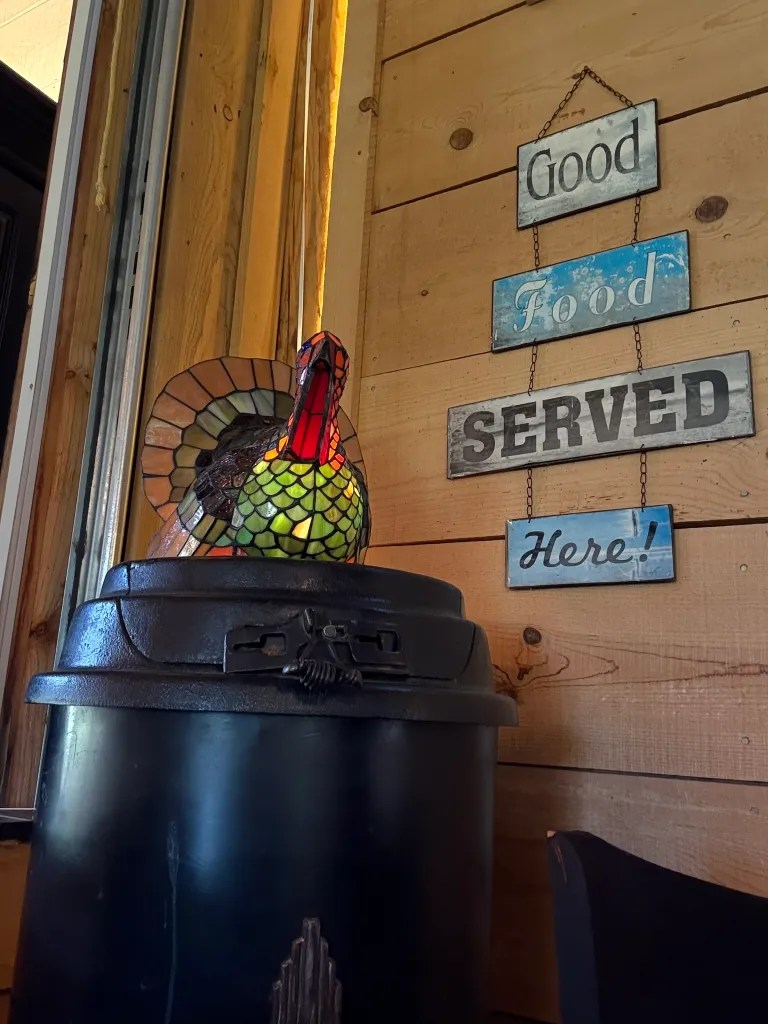
At the opening of town, the Rendezvous Diner is open for breakfast and lunch. Covered in bright flowers and Americana vintage road signs, the rustic décor is part of the fun. Dogs are welcome at the patio seating. Parking is along the street.
A short drive through town brings you to the Edelweiss Resort and Restaurant, which serves authentic German and Polish dishes for lunch and dinner. We enjoyed the friend gouda cheese with handmade cranberry relish and the generous plate of 2 brats and 2 kinds of sauerkraut washed down with a Pilsner.
We didn’t stay at the resort or see the rooms, we did enjoy the welcoming lodge atmosphere with a huge fireplace and cabin-style furniture.
Alpine
On the eastern side of the White Mountains is Alpine nicknamed, “The Alps of Arizona”.
Alpine is also nestled among the pines and mountains, but it has a completely different personality than Greer. This is a town where people actually live and work year-round. Ranchers and longtime locals have chosen the slow, quiet life here.
The community is a destination in itself with some services and eateries. The Tackle Box Gas station, bait shop, and convenience store has daily fishing updates for what’s biting where. Alpine’s downtown hosts car shows on selected weekends and you can find an antique shop or stand.
Several restaurants worth visiting:
The Bear Wallow Café has a forest theme peppered with quirky road signs and forest curios. We loved the burgers and counter seating.
Across the main street, Foxfire at Alpine has a fun Americana feel, live music and other events, and plenty of seating. Dogs are welcome for inside dining.
And for something a bit more gritty, Ye Olde Tavern offers a biker-bar-style experience with pool tables and bar seating. They don’t have much of a food menu, but they do make a good thin-crust pizza.
Springerville and Eagar
At the northern end of the White Mountains are the neighboring high-desert towns of Springerville and Eagar.
We recommend stopping at The Little Pink House for lunch and a little antique shopping. The large yard includes outdoor seating and kid-friendly, dog-friendly garden. Inside, the lower level feels like a Wild West Victorian tea room, while the upper rooms are filled with antiques and locally made items. The menu is a bit fancy but the prices are fair—I had an excellent brie and pear sandwich… which was too good to wait for it’s picture to be taken!
Show Low and Pinetop-Lakeside
To the west, the small towns of Show Low and Pinetop-Lakeside are considered “The Gateway to the White Mountains” and offer the most complete range of services and conveniences before getting into the remote areas of the forest. There are plenty of restaurants, large grocery stores, and automotive services.
Pinetop-Lakeside also offers all levels of lodging from RV parks to vacation rentals to hotels. Yet, the towns are still almost an hour’s drive from the recreational areas deeper in the White Mountains which can make a difference for an early morning fishing trip.
All of these towns are small and sleepy, retirement towns and ranching communities. But if you prefer nature and quiet over nightlife and parties, the White Mountains are an excellent alternative to the overrun and overpriced mountain destinations of Taos, Durango, or Sedona.
The White Mountains of Arizona: What to Know Before You Go
Now that I’ve shown you how the mountains are awesome, there’s some fine print. Since the remoteness of the White Mountains means that more preparation is wise before making the trip.
Don’t Rely on the Smart Phone
Cell service is extremely limited throughout much of the White Mountains because of the mountain terrain. And even when there is a signal, Google Maps and the car’s nav doesn’t provide reliable details on roads and land boundaries.
We highly recommend bringing a detailed paper map. We use the DeLorme State Gazetteer series, which shows far more detail than a typical road map, including smaller roads, campgrounds, fishing spots, trailheads, and topography.
The book is too large to carry in a backpack, but it’s perfect for keeping in the vehicle while exploring. This map always has a place of honor right beside the front seat console.
Services within the mountains are limited and far apart, so plan to be self-sufficient. Bring extra of everything especially food, water, and warm clothing to enjoy extra time outdoors and in case of an emergency.
Keep in mind that while you might be doing great, an emergency comes from elsewhere. Traffic accidents and forest fires are rare but possible. When you have cell service, such as Starlink at your campsite, check alerts with the Arizona Department of Transportation’s 511 Arizona app.
Gas is an important consideration. Tank up in the larger towns of Pinetop-Lakeside before heading farther into the forest. Within the White Mountains, both regular gasoline and diesel are available in Alpine and Springerville but not in Greer. ShowLow does have charging stations but none are yet available deeper in the forest.
The five state highways within the forest are slender and slow mountain roads. Expect to share the road with trucks pulling trailers and sometimes wildlife or livestock crossing the road. The scenic drive is part of the experience, so there’s no reason to rush.
Private transportation is required, we recommend an SUV even if you don’t plan to go off-road, many of the campgrounds and parking areas are on dirt and gravel.
The many pull-outs offer excellent opportunities to spot wildlife too—especially those near meadows.
At the eastern boundary of the White Mountain Apache Reservation where it meets with the Apache-Sitgreaves National Forest are large meadows that are favorite gathering places of elk and pronghorn. A large pullover lot on both sides of the the paved road #273 has with picnic tables and a vault toilet and makes an easy pullover spot.
Weather and the Best Time to Visit
The best time to enjoy the White Mountains is from May through October.
Summer temperatures are typically much cooler than the rest of Arizona, generally ranging from the 80’s during the day’s hike to the 50s around the evening campfire. August can bring daily afternoon thunderstorms, and temperatures can change quickly.
When we escape the 115-degree heat in Phoenix, it’s hard to think about bringing a coat and layers and anything but flip-flops, but wearing the right clothing makes the mountain experience much more enjoyable.
The White Mountains reward travelers who are willing to slow down, plan ahead, and be self-sufficient. That way the remoteness becomes part of the adventure rather than an inconvenience.
The Out This Door Destination Rating Scale: Do Arizona’s White Mountains Break the Back, Bank, or Brain?
Our rating system for destinations, stays, and attractions is based on our own first-hand experience to help you make better travel decisions. We (this includes you, now) are travelers who value our time, comfort, and curiosity.
Do The White Mountains Break the Bank?
From our experience, the White Mountains are one of the more affordable mountain destinations we’ve visited.
There are free dispersed camping opportunities throughout the national forest, reasonably priced campgrounds, and a variety of lodging and dining options that are more affordable than better-known mountain destinations in the West.
Does enjoying the White Mountains break the Back?
It doesn’t have to.
While some visitors enjoy strenuous hikes, mountain biking, skiing and other physically demanding activities, we really enjoy relaxing at camp, scenic drives, and low impact hiking. It’s a choose your own adventure out here! (Did you read those books as a kid?! I did!)
But be aware of the high elevation which causes fatigue sooner and might even cause headaches and stomach aches. Take time to relax and drink lots of water.
Will the White Mountains Break the Brain?
No. That’s the whole point.
The White Mountains are the perfect place to give the brain a break.
There’s something about getting away from the city noise, traffic, crowds, and constant stimulation of everyday life. Here, our biggest decision is which forest road to explore!
Final Thoughts
The White Mountains are a nature-lovers paradise. A hidden gem rivals more costly and overrun mountain west destinations. Rewarding both humans and nature alike with peace and quiet. It isn’t the quickest destination to get to, the best thing about the White Mountains is that they still feel undiscovered.
For travelers looking for a meaningful mountain escape that won’t break the bank, back, or brain, the White Mountains get a strong recommendation from us.
Maybe I’ve sold you on this place.
Maybe I’ve sold you on the restorative power of being in nature.
But more so, I hope I’ve sold you on a travel mindset: You don’t always have to travel to a famous or iconic destination to have an unforgettable experience.
If beautiful places like the White Mountains exist relatively nearby for us in the Southwest—quiet and remote as they are—think of all the places around the world with worthwhile nooks and crannies to explore.
Home » White Mountains, Arizona: The Southwest’s Hidden Mountain Escape Worth the Drive





Leave a Reply